Most borehole problems are pump problems, not problems with the hole itself. Here are the common symptoms and what they usually mean, and Benoni companies that install and repair pumps.
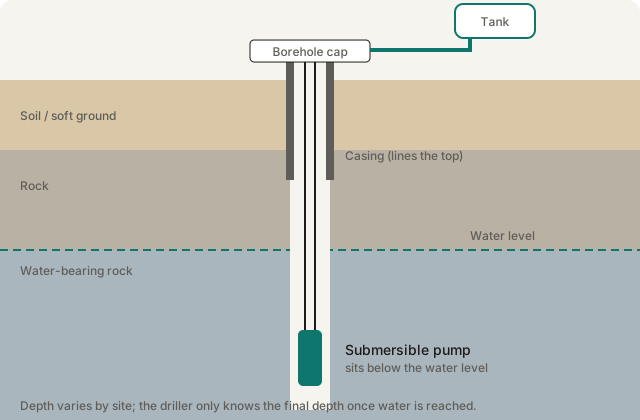
Common symptoms
- No water, but the pump runs: the water level may have dropped below the pump, or there's a blockage.
- Pump trips the electricity: often a cable or motor fault. Don't keep resetting it.
- Low pressure: worn pump, a leak in the pipe, or a pressure tank or switch problem.
- Muddy or sandy water: can damage the pump. Have the borehole checked.
- Pump switches on and off rapidly: usually the pressure tank or pressure switch.
Repair or replace?
Pumps work hard and wear over time. An older pump that keeps failing is often cheaper to replace than repair repeatedly. Ask the company to explain what failed and why.
Questions to ask
- Will you pull the pump and test it on site?
- What's the call-out fee, and is pulling the pump extra?
- What warranty comes with a repair or a new pump?
- Can you check the borehole's current water level and yield?
Frequently asked questions
How long does a borehole pump last?
It varies with water quality, sand, how often the pump starts and stops, and whether it's protected against running dry. Sand and frequent cycling shorten its life the most.
Can a borehole pump run during load shedding or power cuts?
Not a standard mains pump, unless it's on an inverter or generator. A solar or hybrid pump with a storage tank keeps water flowing. See solar borehole pumps.
Why does my pump keep switching on and off?
Short cycling usually points to a pressure tank that has lost its air charge or a faulty pressure switch. Fix it quickly, because it wears out the motor. See borehole pump problems.
Does pulling the pump out of the borehole cost extra?
Usually yes. Removing and reinstalling a submersible pump is labour-intensive, especially in deep boreholes. Ask for it to be listed separately on the quote.